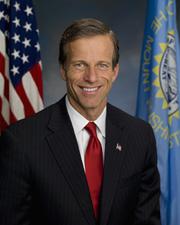
John Thune
Who Do They Work For?
DONOR CAPTUREDJohn Thune's voting record shows 29 high-severity conflicts where votes aligned with top donor industries, with 13% of funding from PACs.
Received $3240K from Finance/Securities, then voted Yea on HR7148 (On Passage of the Bill)Consolidated Appropriations Act, 2026This bill provides appropriations to several federal departments and agencies for the remainder of FY2026 and provides continuing FY2026 appropriations for the Department of Homeland Security (DHS) through February 13, 2026. It also extends various expiring programs and authorities.Specifically, the bill includes 5 of the 12 regular FY2026 appropriations bills:the Department of Defense Appropriations Act, 2026;the Departments of Labor, Health and Human Services, and Education, and Related Agencies Appropriations Act, 2026; the Transportation, Housing and Urban Development, and Related Agencies Appropriations Act, 2026;the Financial Services and General Government Appropriations Act, 2026; andthe National Security, Department of State, and Related Programs Appropriations Act, 2026.The departments, agencies, and activities funded in the bill includethe Department of Defense,the Department of Labor,the Department of Health and Human Services,the Department of Education,the Department of Transportation,the Department of Housing and Urban Development, the Department of the Treasury,the Executive Office of the President,the judiciary,the District of Columbia,the Department of State and related programs,the administration and oversight of foreign assistance programs, bilateral economic assistance,international security assistance,multilateral assistance,export and investment assistance, andseveral related and independent agencies.In addition, the bill includes a continuing resolution (CR) that provides continuing FY2026 appropriations to DHS through the earlier of February 13, 2026, or the enactment of the DHS appropriations act. The CR funds most DHS programs and activities at the FY2025 levels.The bill also extends several expiring programs and authorities, includingthe U.S. Grain Standards Act;the Commodity Futures Trading Commission’s whistleblower program;the National Flood Insurance Program;the Forest Service's participation in the Agriculture Conservation Experienced Services Program;the Transportation Security Administration’s Reimbursable Screening Services Program;the Motor Carrier Safety Advisory Committee;several authorities and programs related to cybersecurity;the technology modernization fund and board;the U.S. Parole Commission;the special assessment on nonindigent persons or entities convicted of certain offenses involving sexual abuse or human trafficking;several immigration-related programs and authorities;the authority for the U.S. Sentencing Commission to promulgate certain guidelines or amendments related to the use of unmanned aircraft; certain bankruptcy fees;trade preferences for Haiti and countries in sub-Saharan Africa;the Temporary Assistance for Needy Families (TANF) program; andseveral health care authorities and programs.
Received $3240K from Finance/Securities, then voted Yea on HR6938 (On the Cloture Motion)Commerce, Justice, Science; Energy and Water Development; and Interior and Environment Appropriations Act, 2026This bill provides FY2026 appropriations to several federal departments and agencies for activities and programs related to commerce, law enforcement, science, energy and water development, public lands, and the environment.Specifically, the bill includes 3 of the 12 regular FY2026 appropriations bills:the Commerce, Justice, Science, and Related Agencies Appropriations Act, 2026;the Energy and Water Development and Related Agencies Appropriations Act, 2026; andthe Department of the Interior, Environment, and Related Agencies Appropriations Act, 2026.The departments, agencies, and activities funded in the bill includethe Department of Commerce,the Department of Justice,the National Aeronautics and Space Administration (NASA),the National Science Foundation,U.S. Army Corps of Engineers civil works projects,the Department of Energy,the Department of the Interior,the Environmental Protection Agency,the Forest Service,the Indian Health Service, andseveral related and independent agencies.The bill also sets forth requirements and restrictions for using funds provided by this and other appropriations acts.
Based on FEC filings and cross-referencing donor industries with congressional votes. Methodology →
💰 Campaign Finance
2024 Election Cycle • Source: Federal Election Commission
Raised $4.2M this cycle. Mixed funding sources — 13.3% from PACs, 5.7% from small donors.
Top donors:
Total Raised
$4.2M
Total Spent
$5.7M
Potential Conflicts of Interest
4 donor industries overlap with John Thune's voting record across 29 votes.
Finance/Securities donated $3.2M, then John voted in alignment with that industry on 11 key bills.
Finance/Securities
$3.2M in donations → 11 related votes
Voted Yea on HR7148 — On Passage of the Bill
Jan 30, 2026
Consolidated Appropriations Act, 2026This bill provides appropriations to several federal departments and agencies for the remainder of FY2026 and provides continuing FY2026 appropriations for the Department of Homeland Security (DHS) through February 13, 2026. It also extends various expiring programs and authorities.Specifically, the bill includes 5 of the 12 regular FY2026 appropriations bills:the Department of Defense Appropriations Act, 2026;the Departments of Labor, Health and Human Services, and Education, and Related Agencies Appropriations Act, 2026; the Transportation, Housing and Urban Development, and Related Agencies Appropriations Act, 2026;the Financial Services and General Government Appropriations Act, 2026; andthe National Security, Department of State, and Related Programs Appropriations Act, 2026.The departments, agencies, and activities funded in the bill includethe Department of Defense,the Department of Labor,the Department of Health and Human Services,the Department of Education,the Department of Transportation,the Department of Housing and Urban Development, the Department of the Treasury,the Executive Office of the President,the judiciary,the District of Columbia,the Department of State and related programs,the administration and oversight of foreign assistance programs, bilateral economic assistance,international security assistance,multilateral assistance,export and investment assistance, andseveral related and independent agencies.In addition, the bill includes a continuing resolution (CR) that provides continuing FY2026 appropriations to DHS through the earlier of February 13, 2026, or the enactment of the DHS appropriations act. The CR funds most DHS programs and activities at the FY2025 levels.The bill also extends several expiring programs and authorities, includingthe U.S. Grain Standards Act;the Commodity Futures Trading Commission’s whistleblower program;the National Flood Insurance Program;the Forest Service's participation in the Agriculture Conservation Experienced Services Program;the Transportation Security Administration’s Reimbursable Screening Services Program;the Motor Carrier Safety Advisory Committee;several authorities and programs related to cybersecurity;the technology modernization fund and board;the U.S. Parole Commission;the special assessment on nonindigent persons or entities convicted of certain offenses involving sexual abuse or human trafficking;several immigration-related programs and authorities;the authority for the U.S. Sentencing Commission to promulgate certain guidelines or amendments related to the use of unmanned aircraft; certain bankruptcy fees;trade preferences for Haiti and countries in sub-Saharan Africa;the Temporary Assistance for Needy Families (TANF) program; andseveral health care authorities and programs.
Voted Yea on HR6938 — On the Cloture Motion
Jan 15, 2026
Commerce, Justice, Science; Energy and Water Development; and Interior and Environment Appropriations Act, 2026This bill provides FY2026 appropriations to several federal departments and agencies for activities and programs related to commerce, law enforcement, science, energy and water development, public lands, and the environment.Specifically, the bill includes 3 of the 12 regular FY2026 appropriations bills:the Commerce, Justice, Science, and Related Agencies Appropriations Act, 2026;the Energy and Water Development and Related Agencies Appropriations Act, 2026; andthe Department of the Interior, Environment, and Related Agencies Appropriations Act, 2026.The departments, agencies, and activities funded in the bill includethe Department of Commerce,the Department of Justice,the National Aeronautics and Space Administration (NASA),the National Science Foundation,U.S. Army Corps of Engineers civil works projects,the Department of Energy,the Department of the Interior,the Environmental Protection Agency,the Forest Service,the Indian Health Service, andseveral related and independent agencies.The bill also sets forth requirements and restrictions for using funds provided by this and other appropriations acts.
Benefits: Department of Commerce, Department of Justice, NASA, National Science Foundation, Department of Energy, Department of Interior, Environmental Protection Agency, Forest Service, Indian Health Service, U.S. Army Corps of Engineers, Federal agencies and their contractors, Scientific research institutions, Environmental conservation programs
Harms: Taxpayers funding appropriations, Federal agencies with reduced or frozen budgets if appropriations are lower than requested, Industries subject to EPA regulations and enforcement
AI analysis of CRS summary
Agriculture
$2.2M in donations → 1 related vote
Voted Nay on S5 — On the Amendment
Jan 15, 2025
Laken Riley ActThis bill requires the Department of Homeland Security (DHS) to detain certain non-U.S. nationals (aliens under federal law) who have been arrested for burglary, theft, larceny, or shoplifting. The bill also authorizes states to sue the federal government for decisions or alleged failures related to immigration enforcement.Under this bill, DHS must detain an individual who (1) is unlawfully present in the United States or did not possess the necessary documents when applying for admission; and (2) has been charged with, arrested for, convicted of, or admits to having committed acts that constitute the essential elements of burglary, theft, larceny, or shoplifting.The bill also authorizes state governments to sue for injunctive relief over certain immigration-related decisions or alleged failures by the federal government if the decision or failure caused the state or its residents harm, including financial harm of more than $100. Specifically, the state government may sue the federal government over adecision to release a non-U.S. national from custody;failure to fulfill requirements relating to inspecting individuals seeking admission into the United States, including requirements related to asylum interviews;failure to fulfill a requirement to stop issuing visas to nationals of a country that unreasonably denies or delays acceptance of nationals of that country;violation of limitations on immigration parole, such as the requirement that parole be granted only on a case-by-case basis; orfailure to detain an individual who has been ordered removed from the United States.
Benefits: State governments (ability to sue federal government for immigration enforcement failures), Law enforcement agencies (mandatory detention requirements reduce discretion needed), Retail businesses and property owners (potential reduction in theft/shoplifting), Communities concerned about property crime
Harms: Non-U.S. nationals arrested for property crimes (mandatory detention regardless of circumstances), Individuals awaiting trial (presumption of detention before conviction), Federal government (increased litigation exposure and mandatory detention costs), Immigration courts and DHS (increased administrative burden and detention facility capacity demands), Due process advocates (mandatory detention limits judicial discretion)
AI analysis of CRS summary
Conflicts detected by cross-referencing top donor industries (FEC data) with votes on related legislation (Congress.gov). Severity based on donation amounts. Not exhaustive — use as a starting point.
🗳️ Key Vote Record
Voted on 189 key issues: 109 Yea, 80 Nay.
How John voted on important legislation
Key Votes
189
Yea
109
Nay
80
Participation
100%
Breaks w/ Party
5%
To rescind certain amounts appropriated for U.S. Immigration and Customs Enforcement and certain changes to Medicaid.
On the Amendment
HR7148Consolidated Appropriations Act, 2026This bill provides appropriations to several federal departments and agencies for the remainder of FY2026 and provides continuing FY2026 appropriations for the Department of Homeland Security (DHS) through February 13, 2026. It also extends various expiring programs and authorities.Specifically, the bill includes 5 of the 12 regular FY2026 appropriations bills:the Department of Defense Appropriations Act, 2026;the Departments of Labor, Health and Human Services, and Education, and Related Agencies Appropriations Act, 2026; the Transportation, Housing and Urban Development, and Related Agencies Appropriations Act, 2026;the Financial Services and General Government Appropriations Act, 2026; andthe National Security, Department of State, and Related Programs Appropriations Act, 2026.The departments, agencies, and activities funded in the bill includethe Department of Defense,the Department of Labor,the Department of Health and Human Services,the Department of Education,the Department of Transportation,the Department of Housing and Urban Development, the Department of the Treasury,the Executive Office of the President,the judiciary,the District of Columbia,the Department of State and related programs,the administration and oversight of foreign assistance programs, bilateral economic assistance,international security assistance,multilateral assistance,export and investment assistance, andseveral related and independent agencies.In addition, the bill includes a continuing resolution (CR) that provides continuing FY2026 appropriations to DHS through the earlier of February 13, 2026, or the enactment of the DHS appropriations act. The CR funds most DHS programs and activities at the FY2025 levels.The bill also extends several expiring programs and authorities, includingthe U.S. Grain Standards Act;the Commodity Futures Trading Commission’s whistleblower program;the National Flood Insurance Program;the Forest Service's participation in the Agriculture Conservation Experienced Services Program;the Transportation Security Administration’s Reimbursable Screening Services Program;the Motor Carrier Safety Advisory Committee;several authorities and programs related to cybersecurity;the technology modernization fund and board;the U.S. Parole Commission;the special assessment on nonindigent persons or entities convicted of certain offenses involving sexual abuse or human trafficking;several immigration-related programs and authorities;the authority for the U.S. Sentencing Commission to promulgate certain guidelines or amendments related to the use of unmanned aircraft; certain bankruptcy fees;trade preferences for Haiti and countries in sub-Saharan Africa;the Temporary Assistance for Needy Families (TANF) program; andseveral health care authorities and programs.
To prevent the deferral or rescission of appropriations within 90 days of their expiration.
On the Motion
HR7148Consolidated Appropriations Act, 2026This bill provides appropriations to several federal departments and agencies for the remainder of FY2026 and provides continuing FY2026 appropriations for the Department of Homeland Security (DHS) through February 13, 2026. It also extends various expiring programs and authorities.Specifically, the bill includes 5 of the 12 regular FY2026 appropriations bills:the Department of Defense Appropriations Act, 2026;the Departments of Labor, Health and Human Services, and Education, and Related Agencies Appropriations Act, 2026; the Transportation, Housing and Urban Development, and Related Agencies Appropriations Act, 2026;the Financial Services and General Government Appropriations Act, 2026; andthe National Security, Department of State, and Related Programs Appropriations Act, 2026.The departments, agencies, and activities funded in the bill includethe Department of Defense,the Department of Labor,the Department of Health and Human Services,the Department of Education,the Department of Transportation,the Department of Housing and Urban Development, the Department of the Treasury,the Executive Office of the President,the judiciary,the District of Columbia,the Department of State and related programs,the administration and oversight of foreign assistance programs, bilateral economic assistance,international security assistance,multilateral assistance,export and investment assistance, andseveral related and independent agencies.In addition, the bill includes a continuing resolution (CR) that provides continuing FY2026 appropriations to DHS through the earlier of February 13, 2026, or the enactment of the DHS appropriations act. The CR funds most DHS programs and activities at the FY2025 levels.The bill also extends several expiring programs and authorities, includingthe U.S. Grain Standards Act;the Commodity Futures Trading Commission’s whistleblower program;the National Flood Insurance Program;the Forest Service's participation in the Agriculture Conservation Experienced Services Program;the Transportation Security Administration’s Reimbursable Screening Services Program;the Motor Carrier Safety Advisory Committee;several authorities and programs related to cybersecurity;the technology modernization fund and board;the U.S. Parole Commission;the special assessment on nonindigent persons or entities convicted of certain offenses involving sexual abuse or human trafficking;several immigration-related programs and authorities;the authority for the U.S. Sentencing Commission to promulgate certain guidelines or amendments related to the use of unmanned aircraft; certain bankruptcy fees;trade preferences for Haiti and countries in sub-Saharan Africa;the Temporary Assistance for Needy Families (TANF) program; andseveral health care authorities and programs.
A bill making further consolidated appropriations for the fiscal year ending September 30, 2026, and for other purposes.
On Passage of the Bill
HR7148Consolidated Appropriations Act, 2026This bill provides appropriations to several federal departments and agencies for the remainder of FY2026 and provides continuing FY2026 appropriations for the Department of Homeland Security (DHS) through February 13, 2026. It also extends various expiring programs and authorities.Specifically, the bill includes 5 of the 12 regular FY2026 appropriations bills:the Department of Defense Appropriations Act, 2026;the Departments of Labor, Health and Human Services, and Education, and Related Agencies Appropriations Act, 2026; the Transportation, Housing and Urban Development, and Related Agencies Appropriations Act, 2026;the Financial Services and General Government Appropriations Act, 2026; andthe National Security, Department of State, and Related Programs Appropriations Act, 2026.The departments, agencies, and activities funded in the bill includethe Department of Defense,the Department of Labor,the Department of Health and Human Services,the Department of Education,the Department of Transportation,the Department of Housing and Urban Development, the Department of the Treasury,the Executive Office of the President,the judiciary,the District of Columbia,the Department of State and related programs,the administration and oversight of foreign assistance programs, bilateral economic assistance,international security assistance,multilateral assistance,export and investment assistance, andseveral related and independent agencies.In addition, the bill includes a continuing resolution (CR) that provides continuing FY2026 appropriations to DHS through the earlier of February 13, 2026, or the enactment of the DHS appropriations act. The CR funds most DHS programs and activities at the FY2025 levels.The bill also extends several expiring programs and authorities, includingthe U.S. Grain Standards Act;the Commodity Futures Trading Commission’s whistleblower program;the National Flood Insurance Program;the Forest Service's participation in the Agriculture Conservation Experienced Services Program;the Transportation Security Administration’s Reimbursable Screening Services Program;the Motor Carrier Safety Advisory Committee;several authorities and programs related to cybersecurity;the technology modernization fund and board;the U.S. Parole Commission;the special assessment on nonindigent persons or entities convicted of certain offenses involving sexual abuse or human trafficking;several immigration-related programs and authorities;the authority for the U.S. Sentencing Commission to promulgate certain guidelines or amendments related to the use of unmanned aircraft; certain bankruptcy fees;trade preferences for Haiti and countries in sub-Saharan Africa;the Temporary Assistance for Needy Families (TANF) program; andseveral health care authorities and programs.
A bill making further consolidated appropriations for the fiscal year ending September 30, 2026, and for other purposes.
On Cloture on the Motion to Proceed
HR7148Consolidated Appropriations Act, 2026This bill provides appropriations to several federal departments and agencies for the remainder of FY2026 and provides continuing FY2026 appropriations for the Department of Homeland Security (DHS) through February 13, 2026. It also extends various expiring programs and authorities.Specifically, the bill includes 5 of the 12 regular FY2026 appropriations bills:the Department of Defense Appropriations Act, 2026;the Departments of Labor, Health and Human Services, and Education, and Related Agencies Appropriations Act, 2026; the Transportation, Housing and Urban Development, and Related Agencies Appropriations Act, 2026;the Financial Services and General Government Appropriations Act, 2026; andthe National Security, Department of State, and Related Programs Appropriations Act, 2026.The departments, agencies, and activities funded in the bill includethe Department of Defense,the Department of Labor,the Department of Health and Human Services,the Department of Education,the Department of Transportation,the Department of Housing and Urban Development, the Department of the Treasury,the Executive Office of the President,the judiciary,the District of Columbia,the Department of State and related programs,the administration and oversight of foreign assistance programs, bilateral economic assistance,international security assistance,multilateral assistance,export and investment assistance, andseveral related and independent agencies.In addition, the bill includes a continuing resolution (CR) that provides continuing FY2026 appropriations to DHS through the earlier of February 13, 2026, or the enactment of the DHS appropriations act. The CR funds most DHS programs and activities at the FY2025 levels.The bill also extends several expiring programs and authorities, includingthe U.S. Grain Standards Act;the Commodity Futures Trading Commission’s whistleblower program;the National Flood Insurance Program;the Forest Service's participation in the Agriculture Conservation Experienced Services Program;the Transportation Security Administration’s Reimbursable Screening Services Program;the Motor Carrier Safety Advisory Committee;several authorities and programs related to cybersecurity;the technology modernization fund and board;the U.S. Parole Commission;the special assessment on nonindigent persons or entities convicted of certain offenses involving sexual abuse or human trafficking;several immigration-related programs and authorities;the authority for the U.S. Sentencing Commission to promulgate certain guidelines or amendments related to the use of unmanned aircraft; certain bankruptcy fees;trade preferences for Haiti and countries in sub-Saharan Africa;the Temporary Assistance for Needy Families (TANF) program; andseveral health care authorities and programs.
A bill making consolidated appropriations for the fiscal year ending September 30, 2026, and for other purposes.
On the Cloture Motion
HR6938Commerce, Justice, Science; Energy and Water Development; and Interior and Environment Appropriations Act, 2026This bill provides FY2026 appropriations to several federal departments and agencies for activities and programs related to commerce, law enforcement, science, energy and water development, public lands, and the environment.Specifically, the bill includes 3 of the 12 regular FY2026 appropriations bills:the Commerce, Justice, Science, and Related Agencies Appropriations Act, 2026;the Energy and Water Development and Related Agencies Appropriations Act, 2026; andthe Department of the Interior, Environment, and Related Agencies Appropriations Act, 2026.The departments, agencies, and activities funded in the bill includethe Department of Commerce,the Department of Justice,the National Aeronautics and Space Administration (NASA),the National Science Foundation,U.S. Army Corps of Engineers civil works projects,the Department of Energy,the Department of the Interior,the Environmental Protection Agency,the Forest Service,the Indian Health Service, andseveral related and independent agencies.The bill also sets forth requirements and restrictions for using funds provided by this and other appropriations acts.
Benefits: Department of Commerce, Department of Justice, NASA, National Science Foundation, Department of Energy, Department of Interior, Environmental Protection Agency, Forest Service, Indian Health Service, U.S. Army Corps of Engineers, Federal agencies and their contractors, Scientific research institutions, Environmental conservation programs
Harms: Taxpayers funding appropriations, Federal agencies with reduced or frozen budgets if appropriations are lower than requested, Industries subject to EPA regulations and enforcement
AI analysis of CRS summary
Financial Disclosures
⚠️ Scandals & Controversies
Verified incidents with sources
No verified incidents on record
This member has no documented scandals, ethics violations, or investigations meeting our sourcing requirements.
Coming Soon
Say vs Do Analysis
Track whether representatives follow through on their campaign promises
Net Worth Tracking
Monitor changes in representatives' wealth during their time in office
Dark Money Tracking
Identify undisclosed and hard-to-trace campaign funding sources
Data pending: Committee Memberships. Learn about our data sources →